Design guide
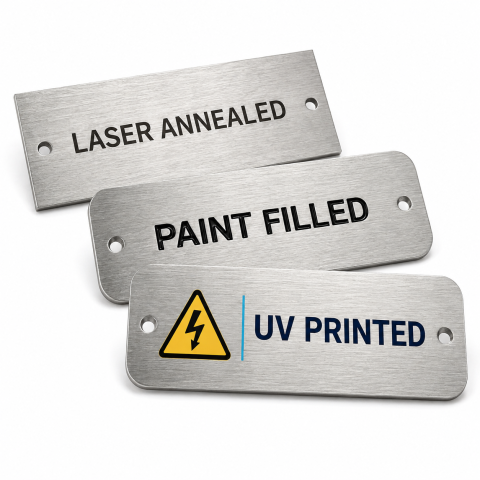
Printed labels and signs use HP Latex ink on self-adhesive vinyl and UV-cured Mimaki inks on rigid substrates including aluminium, aluminium composite (ACM), polypropylene and brushed SS316. Full-colour artwork, logos and compliance layouts are all achievable — provided files meet resolution, colour and bleed requirements. Use this guide to prepare print-ready artwork for Australian industrial and safety applications.
Digital printing applies CMYK (and sometimes white or spot) ink directly to the label or sign surface. Self-adhesive vinyl and stickers are produced with HP Latex ink; rigid panels are printed with Mimaki LH100 or LUS120 UV-cured inks. Unlike engraving, printing supports full-colour graphics, photographic elements, gradients and complex compliance layouts — ideal for safety signs, branding, directional signage and warning labels.
Plastic Tags produces printed safety signs, compliance labels, fleet graphics and custom signage for Australian commercial, industrial and renewable energy projects.
Print vs engrave
Printing suits complex graphics and colour-critical safety signage. Engraving suits maximum durability where artwork is primarily text and symbols. Compare both processes in our engraved vs printed labels guide.
Supply print-ready files at the finished sign or label size. These specifications apply to most digital print orders:
| Item | Recommendation |
|---|---|
| Preferred format | PDF/X-1a or PDF with embedded fonts; also AI, EPS, PSD |
| Colour mode | CMYK (convert from RGB before export) |
| Artwork scale | 1:1 at final dimensions (mm) |
| Fonts | Embed or convert to outlines |
| Spot colours | Specify Pantone references where colour matching is critical |
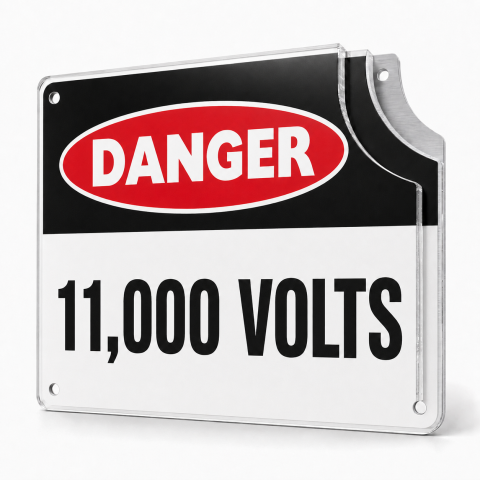
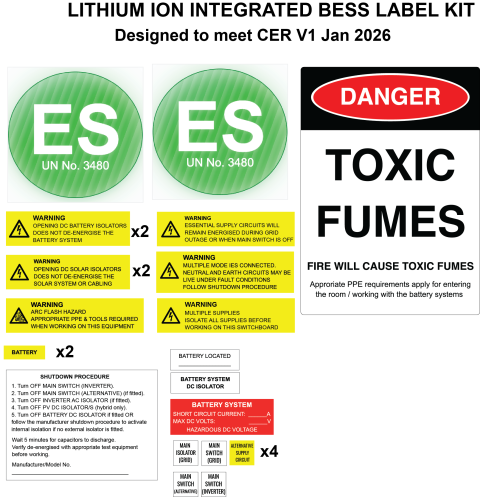
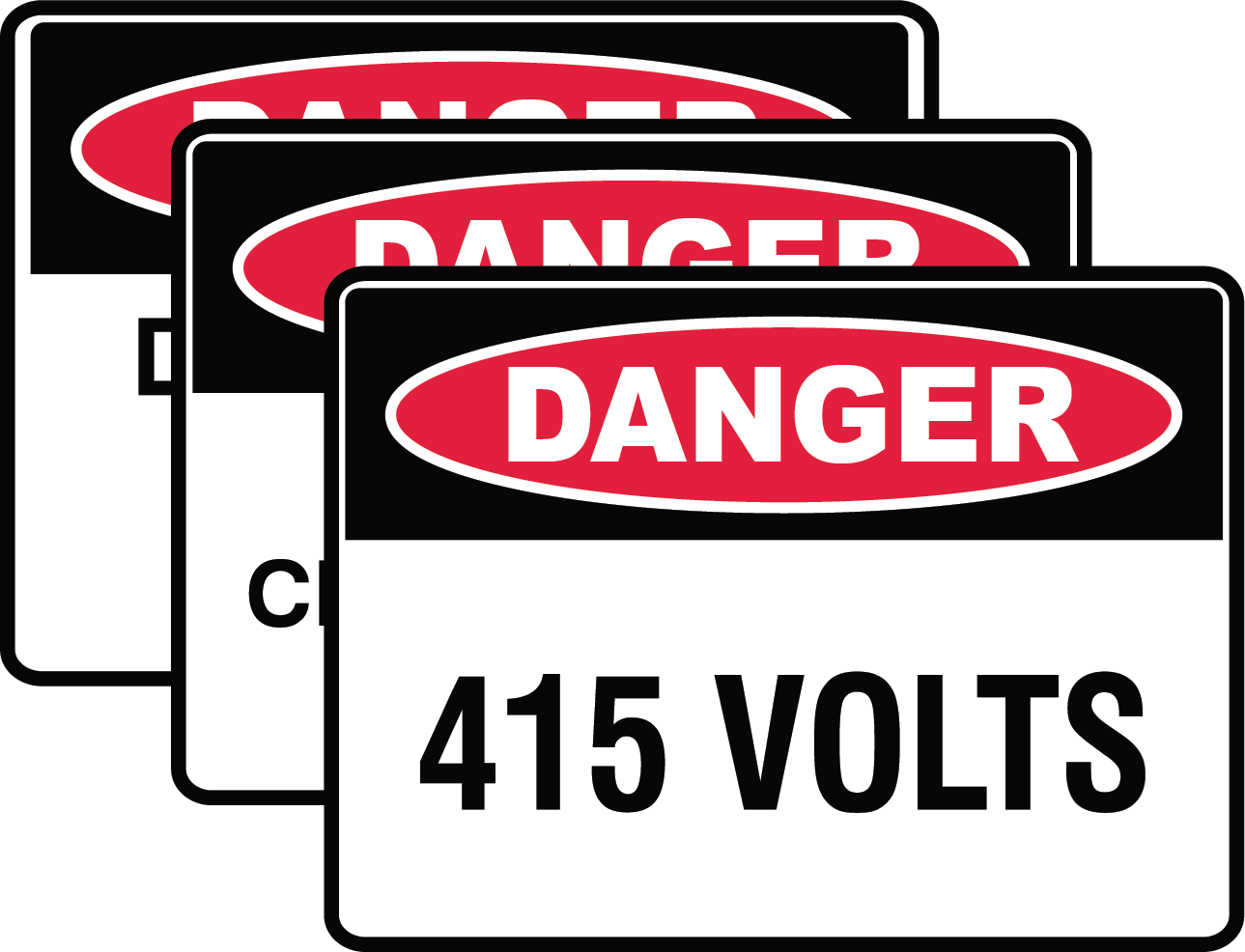
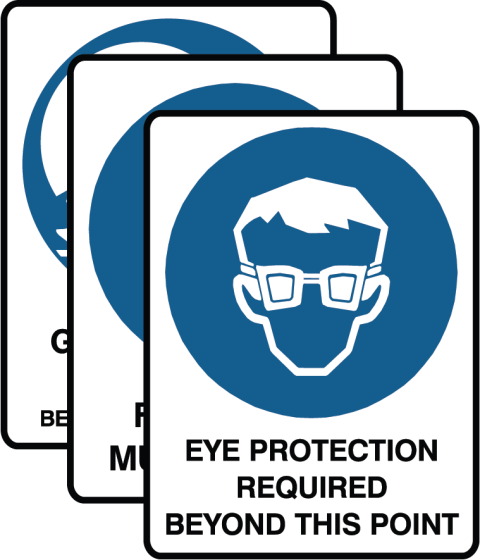
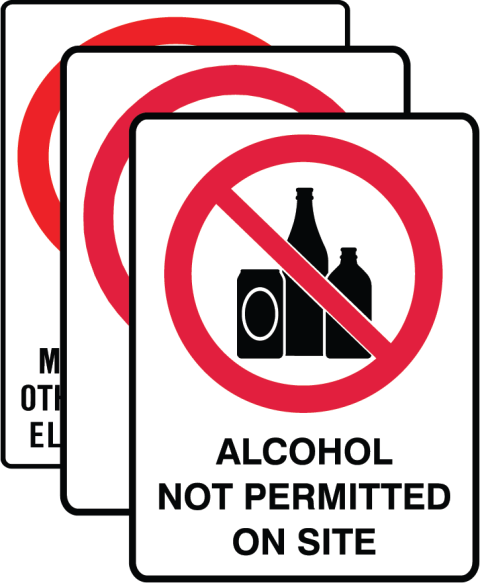
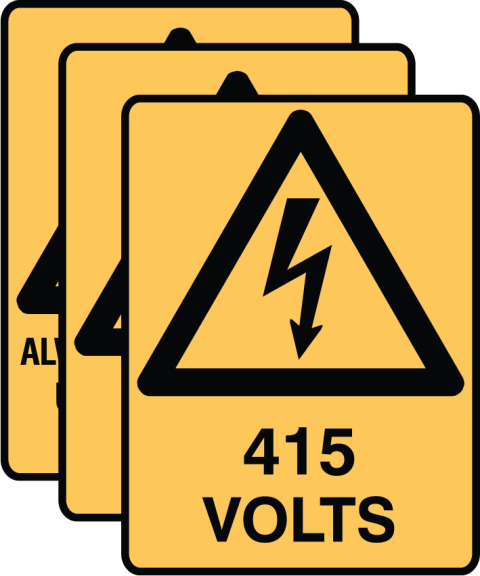
| Compliance signs | Follow AS 1319 layout, colours and pictogram requirements |
For safety and warning signs, use standard pictograms and colour fields as defined in AS 1319 and relevant industry standards. Do not resize or recolour standard symbols without checking compliance requirements.
Vector artwork is preferred for logos, text and line work — it scales cleanly at any size. Raster elements (photos, shaded graphics) must meet minimum resolution at final output size.
| Element | Minimum resolution | Notes |
|---|---|---|
| Logos and line art | Vector | Embed or outline; avoid low-res PNG upscaling |
| Photographs / shaded graphics | 150 DPI at final size | 300 DPI preferred for close-viewing signs |
| Small text (under 8 pt) | Vector only | Raster text below 6 pt may appear soft |
| Barcodes and QR codes | Vector or 300 DPI minimum | Test scan before bulk print |
Minimum text sizes (guideline)
Print files are supplied in CMYK process colour. Rigid substrates are printed with UV-cured Mimaki inks; flexible vinyl uses HP Latex. Screen colours (RGB) will shift when converted — always proof critical brand and safety colours in CMYK or Pantone before final production.
Printed colours may appear slightly different on gloss vs matte laminates and on metallic substrates. Request a physical sample for colour-critical projects.
Labels and signs are printed oversize then trimmed to final dimensions. Artwork that extends to the edge needs bleed to avoid white borders after cutting.
| Zone | Offset from trim | Purpose |
|---|---|---|
| Bleed | 3 mm beyond trim on all sides | Background colour/image extends past cut line |
| Trim line | Final label/sign edge | Where the product is cut |
| Safe area | 3 mm inside trim | Keep text and logos inside this zone |
Signs with rounded corners or custom shapes need vector cut paths supplied separately or confirmed in our template. For standard rectangular safety signs, our tooling applies standard corner radii unless otherwise specified.
Mounting holes and fixing
Keep text and critical graphics outside hole centres and edge fixing zones. See our installation guide for fixing methods and surface preparation.
Substrate choice affects ink adhesion, outdoor lifespan and appearance. Lamination protects printed surfaces from UV, abrasion and chemicals.
| Substrate | Typical use | Print notes |
|---|---|---|
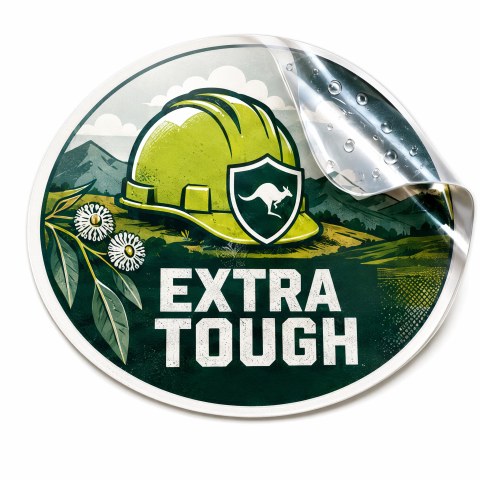
| Self-adhesive vinyl (SAV) | Compliance labels, decals, fleet graphics | HP Latex print; choose polymeric vinyl for outdoor, calendared for short-term indoor |
| Aluminium | Premium safety signs, branded panels | White vinyl overlay on 2 mm sheet; Mimaki UV print |
| Aluminium composite (ACM) | Outdoor signs, site boards | Rigid 3 mm panel; Mimaki UV print with over-laminate for extended life |
| Polypropylene | Economical indoor signage, compliance layouts | Lightweight 2 mm sheet; Mimaki UV print |
| SS316 brushed stainless steel | Marine, mining and harsh-environment signage | Rigid panel; Mimaki UV print for durable graphics on metal |
| Reflective vinyl | Road, mining and fleet signage | HP Latex print; see our reflective vinyl guide |
| Magnetic sheet | Temporary vehicle and site signage | Flat artwork; avoid heavy ink coverage on edges |
Outdoor signs and labels should include a UV-stable over-laminate unless the substrate is rated for direct UV exposure. Lamination adds 2–5 years of outdoor life depending on exposure and material grade. See Print technology for ink systems matched to each substrate.
Plastic Tags matches ink technology to the substrate. Flexible vinyl prints and rigid sign panels use different curing systems — each selected for adhesion, colour quality and durability in Australian conditions.
| Application | Ink system | Typical substrates | Benefits |
|---|---|---|---|
| Self-adhesive vinyl (SAV) and stickers | HP Latex | Compliance labels, decals, fleet graphics, reflective vinyl | Water-based latex bonds well to flexible vinyl; suited to outdoor decals and contoured surfaces |
| Rigid substrates | Mimaki LH100 or LUS120 (UV-cured) | Aluminium, aluminium composite (ACM), polypropylene, brushed SS316 stainless steel | UV inks formulated for hard surfaces — strong adhesion and abrasion resistance on rigid panels |
Ink selection
LH100 and LUS120 are UV-cured inks used on our Mimaki flatbed printers. The ink grade is matched to your substrate during production — you do not need to specify it in artwork files.
UV-cured Mimaki LH100 and LUS120 inks bond to rigid substrate surfaces and cure instantly under UV light. HP Latex prints on vinyl cure through a different process — both are suited to outdoor use when paired with the appropriate substrate and laminate grade. For Australian outdoor conditions — high UV, heat, rain and dust — material and laminate selection matter as much as artwork quality.
For long-term outdoor durability comparisons, see our Material Guide.
Before you submit artwork
You can, but colours will be converted to CMYK for printing and may shift noticeably — especially bright greens, oranges and blues. Convert and proof in CMYK before submitting to avoid surprises.
Self-adhesive vinyl and stickers are printed with HP Latex ink. Rigid substrates — aluminium, ACM, polypropylene and brushed SS316 — are printed with Mimaki LH100 or LUS120 UV-cured inks, matched to the panel during production.
White ink is available on selected substrates (clear vinyl, dark materials, reflective base). Contact us to confirm availability for your project.
Lifespan depends on substrate, laminate, orientation and environment. Laminated polymeric vinyl signs typically last 3–7 years outdoors; engraved alternatives may outlast printed graphics in harsh abrasion environments.
We aim for close Pantone matches within CMYK print limits. For critical brand work, request a printed colour sample before production.
Browse our safety sign range or contact us for custom printed signage with UV-stable materials and Australian production.