Design guide
Design Guide for Engraved Labels, Tags & Nameplates
Engraved labels are manufactured by removing the surface layer of a specialised engraving laminate to reveal a contrasting core colour underneath. This creates a permanent, highly durable mark that won’t peel, fade or wear away like printed alternatives.
Our engraved products are commonly used for:
Most orders are created directly through our online ordering system. If you have a large schedule or existing drawings, we can also import label information from spreadsheets and engineering drawings.
The easiest and fastest way to order engraved labels is through our online design and ordering system.
Benefits include:
For switchboard labels, cable markers and tag schedules, simply enter your label information directly into the website.
For larger projects, we can import label schedules directly from Excel.
Import template
Download our Excel template to prepare your label schedule, then upload it through our import page.
A spreadsheet should contain:
| Label Text | Quantity | Width (Optional) | Height (Optional) |
|---|---|---|---|
| MAIN SWITCH | 10 | 75 | 25 |
| GENERATOR ISOLATOR | 5 | 100 | 25 |
This is the preferred format for projects containing dozens or hundreds of labels.
If labels are already shown on engineering drawings, we can often work from these documents.
For best results:
Least preferred method
A single drawing containing every label on the sheet is the least preferred method. These drawings often require manual extraction of label information which can increase processing time, increase the likelihood of transcription errors, and delay production. Where possible, use our website or provide an Excel schedule instead.
Good engraving design prioritises readability. A label should be easy to read from the intended viewing distance and under the expected lighting conditions.

| Application | Typical Size |
|---|---|
| Switchboard Labels | 75 × 25 mm |
| Distribution Board Labels | 100 × 25 mm |
| Cable Markers | 50 × 15 mm |
| Valve Tags | 50 × 25 mm |
| Asset Tags | 75 × 38 mm |
| Equipment Plates | Project specific |
These are guides only. Custom sizes are available.
Clear, simple fonts produce the best engraving results.
Recommended fonts include:
| Application | Recommended Minimum |
|---|---|
| Small Cable Markers | 2.5 mm |
| Switchboard Labels | 3 mm |
| Outdoor Asset Labels | 4 mm |
| Equipment Nameplates | 4 mm+ |
Where space permits, larger text should always be used.
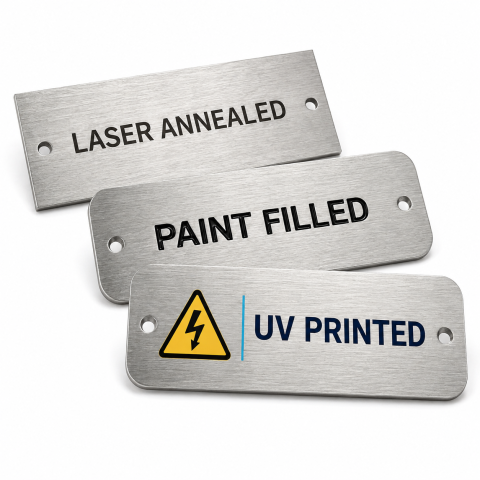
Simple logos and symbols engrave extremely well.
Examples include:
If you’re unsure whether a logo will engrave correctly, send it through and we’ll review it before production.
Many engraved tags require fixing holes, slots or cut-outs.
| Hole Diameter | Typical Application |
|---|---|
| 3 mm | Small screws |
| 4 mm | Standard electrical applications |
| 5 mm | Rivets and larger fixings |
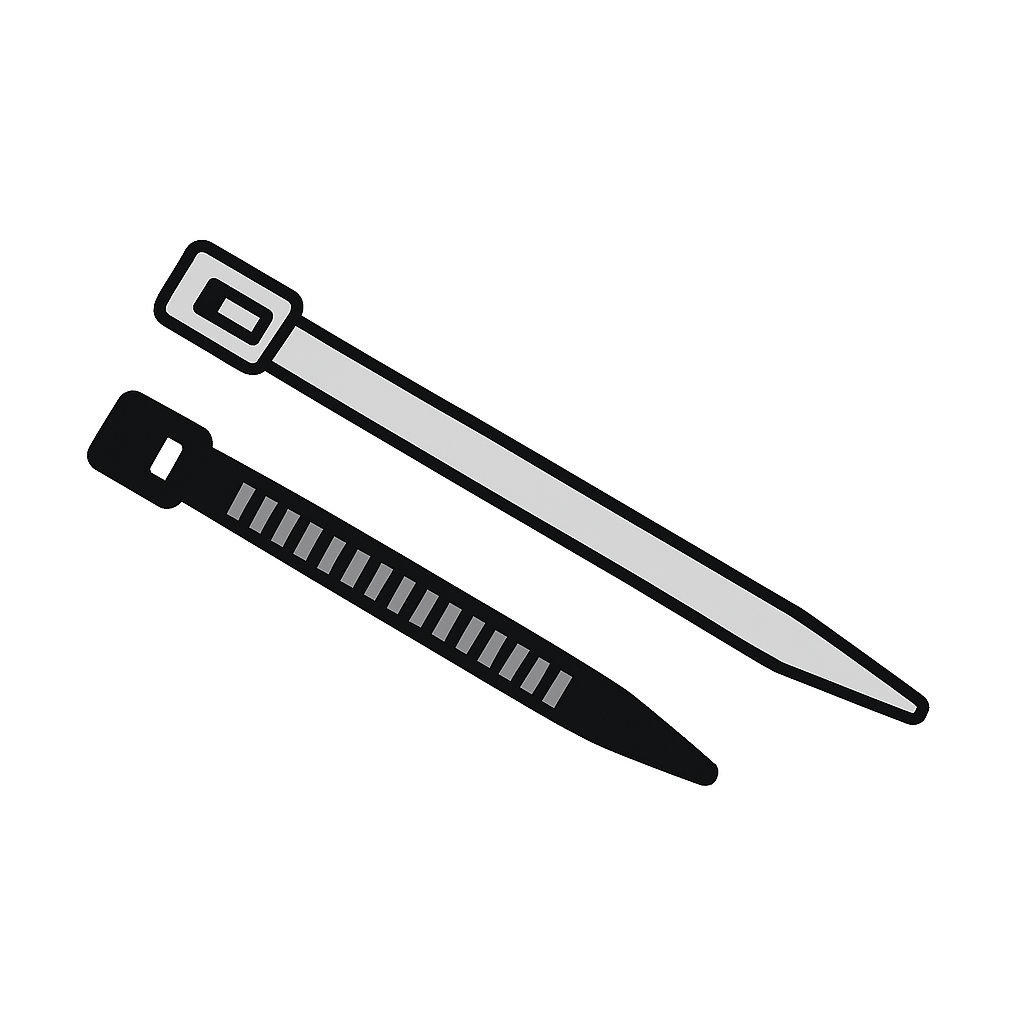
For cable tie markers we recommend:
Different engraving materials suit different environments.
| Material | Typical Use |
|---|---|
| Engraving Laminate | Switchboards, control panels, electrical labels |
| UV-Stable Engraving Laminate | Outdoor electrical and industrial applications |
| Stainless Steel | Mining, marine and harsh environments |
For outdoor applications we recommend:
See our Material Guide for detailed material comparisons.
Before submitting your order
Yes. For large projects, spreadsheets are often the quickest and most accurate method.
No. Most customers simply enter their labels through our website and we generate the production artwork automatically.
Yes. We can extract labels from PDFs and engineering drawings, although spreadsheets and website uploads are generally faster and more accurate.
Yes. Simple vector logos, symbols and QR codes engrave extremely well.
As a general guide, 2.5 mm character height is the practical minimum for most applications. Larger text is always recommended where space allows.
Absolutely. If you’re unsure about sizing, layout, materials or engraving suitability, send us your information and we’ll review it before manufacturing.
Upload your labels through our online ordering system for instant pricing, live proofing and fast Australian production.
For large projects, send us your Excel schedule or engineering drawings and we’ll help prepare the order.